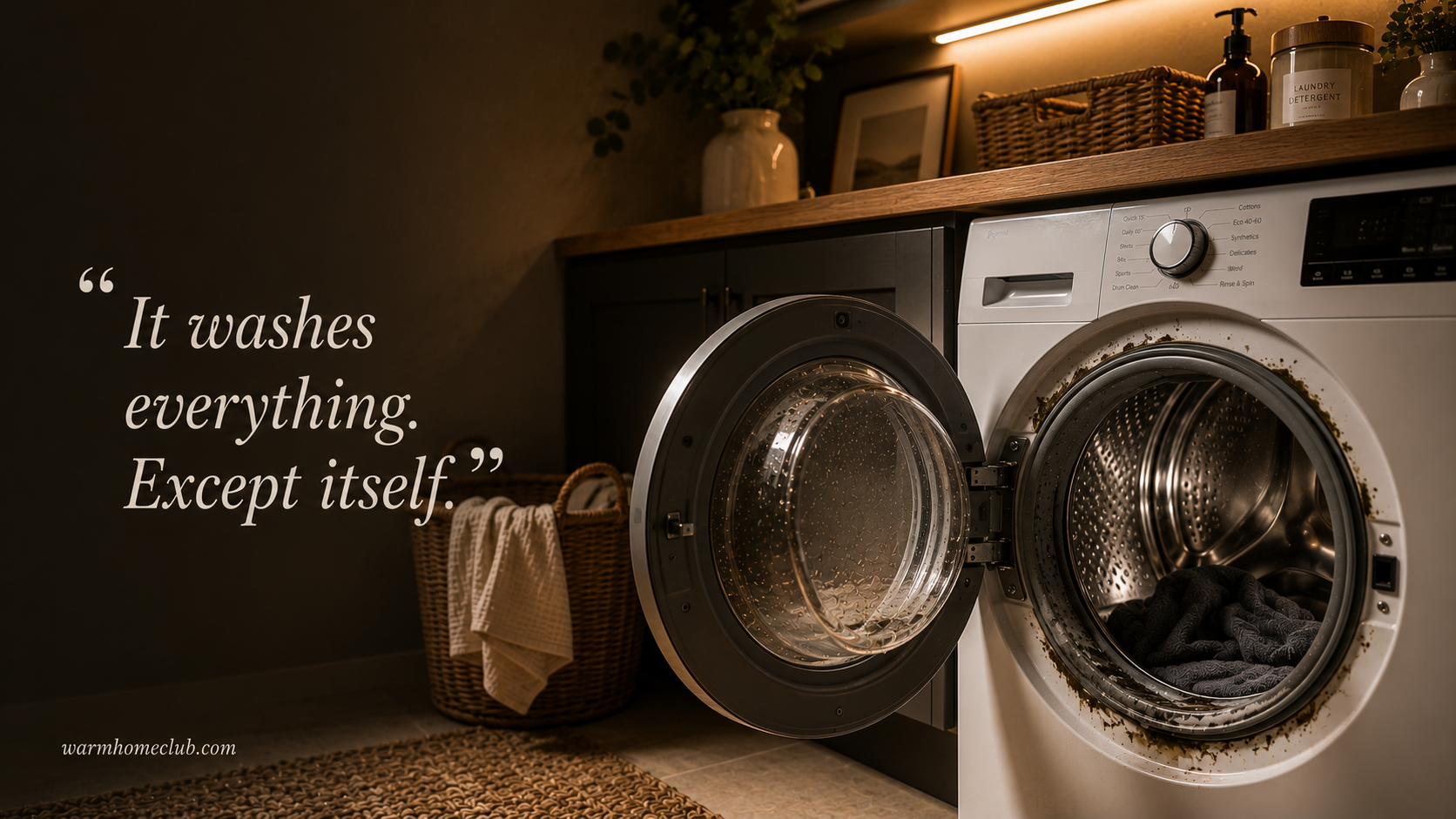
A washing machine is meant to leave things smelling clean, so it’s a genuinely unpleasant surprise when the machine itself starts to smell first. The good news is that the smell itself is usually a decent clue to the actual cause, and most of the common ones are fixable in an afternoon rather than needing a repair callout.
Nearly every cause comes down to the same thing: moisture and residue sitting somewhere in the machine long enough for mould, mildew or bacteria to take hold.
The smell itself tells you the cause. Identify it before you start cleaning.
Diagnose the smell first
Four smells, four different causes. Find yours before you start cleaning, because the fix is different in each case.
- What it smells likeMusty, stale, or like a wet dogAlmost certainlyMould or mildew, the most common cause by farStart hereThe door seal, detergent drawer and drum
- What it smells likeSour, like laundry that has gone offAlmost certainlyDetergent or softener residue breaking downStart hereA hot service wash
- What it smells likeSewage or drainsAlmost certainlyStanding water somewhere in the systemStart hereThe drain filter
- What it smells likeRubber, or burning rubberAlmost certainlyNew parts settling in, or a mechanical faultStart hereRead the warning below before running another cycle
Why washing machines actually smell in the first place
Beyond a mechanical fault, it comes down to moisture and residue sitting somewhere for long enough to let mould, mildew, or bacteria establish itself. A few everyday habits, and one thing outside your control, make this considerably worse.
Washing exclusively on low or eco cycles saves energy, but these cycles don’t always reach a high enough temperature to kill off bacteria or fully break down detergent residue, which lets it build up over time.
Closing the door and detergent drawer straight after a wash traps the moisture and warmth from the last cycle inside, which is close to ideal conditions for mould to grow.
The underlying problem is the same one behind damp and mould elsewhere in the home: trapped moisture with nowhere to go. If musty smells are a wider issue in your house, not just the washing machine, our guides to why your house might be so damp in winter and whether dehumidifiers actually help with mould cover the same problem on a room-wide scale.
Mineral deposits from hard water build up inside the machine and in pipework over time, and this limescale can trap residue and bacteria alongside it, making odours more likely even in an otherwise well-maintained machine. It can also gradually reduce how effectively the machine heats water and drains it, which compounds the residue problem rather than just adding a separate one. In a hard water area, it’s worth choosing a service wash product that specifically targets limescale rather than relying on vinegar alone.
How to actually fix it
Work through these in order. The first one resolves the majority of cases on its own.
Run a monthly service wash
Run the machine empty, with no clothes, on the hottest cycle it offers, ideally 60°C or above. Adding around 250ml of distilled white vinegar directly to the drum genuinely improves the result over hot water alone, since vinegar is a natural disinfectant that helps break down detergent residue and limescale as it goes.
Making this a genuine monthly habit, rather than a one-off fix, is the single most effective thing most households can do.
Clean the door seal and detergent drawer by hand
Wipe inside the folds of the rubber seal with a cloth and a water and vinegar solution, since this is where hair, scum, and moisture collect most. Remove the detergent drawer if your machine allows it and rinse away any built-up residue.
Weekly is the generally recommended frequency, though even a quick wipe every few washes makes a genuine difference over leaving it entirely.
Check the drain filter for blockages
Most machines have an accessible filter, usually behind a small panel at the bottom front of the machine. It’s worth checking this periodically for lint, hair, or small debris that can restrict drainage and cause standing water to smell.
Leave the door and drawer open between washes
Rather than closing everything up straight after a cycle, leaving the door ajar lets the drum air out and dry properly, which meaningfully reduces the moisture mould needs to establish itself.
When it's not something you can clean your way out of
If you’ve run a proper service wash, cleaned the seal and drawer thoroughly, and checked the filter, and the smell persists, this points toward a genuine mechanical or plumbing issue rather than a cleaning problem.
A failing drain pump, a deeper blockage further down the drainage pipe, or an issue with the wider household drain can all cause a persistent smell that no amount of cleaning fixes. At this point, it’s worth calling a qualified appliance repair technician rather than continuing to try home remedies, particularly if the smell is specifically of sewage or accompanied by drainage problems during the cycle.
Repair or replace?
A persistent smell on its own doesn’t necessarily mean the machine needs replacing, and a service wash plus a proper clean resolves the vast majority of cases. But if the smell is turning up alongside other signs of an ageing machine, poor spin performance, unusual noises during the cycle, increasingly frequent error codes, or repeated drainage problems even after clearing the filter, it’s worth having an honest conversation with a repair technician about whether a repair is genuinely worthwhile versus whether the machine is simply reaching the end of its practical life. An older machine with a genuine mechanical fault and a persistent smell together is a reasonable point to weigh the cost of another repair against the cost of a new, more efficient machine.
The quick fix checklist
The whole guide, in the order worth doing it.
- Run a monthly service wash at 60°C or above, empty, with vinegar or a dedicated cleaner
- Clean the door seal and detergent drawer by hand, weekly if you can
- Check the drain filter periodically for lint and debris
- Leave the door and drawer open between washes
- In a hard water area, use a limescale-specific cleaner rather than vinegar alone
Smelly washing machines: your questions answered
Once a month is generally recommended for most households. Run the machine empty on its hottest cycle, usually 60°C or above, with around 250ml of distilled white vinegar or a dedicated washing machine cleaner tablet added to the drum. This clears detergent residue and limescale and kills bacteria that lower everyday washes don’t reach. Households that wash mostly on cool or eco cycles benefit from this even more, since those cycles rarely get hot enough on their own to prevent residue building up.
A sewage smell usually points to standing water somewhere in the drainage system, often caused by a partial blockage in the filter, drain pump, or standpipe. Efficient, low-water machines are more prone to this, since they don’t always fully flush residue away on lower settings. Checking and clearing the accessible drain filter is the first step, and if the smell persists after cleaning, it may indicate a deeper blockage or a failing drain pump.
It depends on the machine’s age. In a new machine, a rubber smell is often just fresh components settling in and commonly fades within 10 to 20 cycles on its own. In an older machine, or if the smell doesn’t fade, it can indicate a worn drive belt or a motor pulley issue, both of which are mechanical faults rather than cleaning problems. If in doubt, pause use and have it checked rather than continuing to run cycles, since a genuine mechanical fault can worsen with continued use.
Front-loading machines have a rubber door seal that traps water, hair, and residue in its folds, creating an ideal environment for mould and bacteria. Front-loaders also generally use less water per cycle than top-loaders, which is efficient but can leave more residue behind rather than fully rinsing it away. Regularly cleaning the door seal and running a monthly hot service wash largely offsets this difference.
Yes, it can be a genuine contributing factor, and much of the UK has hard water. Mineral deposits build up inside the machine and in pipework over time, and this limescale can trap residue and bacteria alongside it, making odours more likely even in an otherwise well-maintained machine. A monthly service wash with vinegar or a dedicated descaling cleaner helps manage this buildup.
If a proper service wash, a thorough clean of the door seal and detergent drawer, and a check of the drain filter haven’t resolved the smell, this points toward a genuine mechanical or plumbing issue rather than a cleaning problem. A failing drain pump, a deeper blockage in the drainage pipe, or an issue with the wider household drain can all cause a persistent smell that cleaning alone won’t fix, and it’s worth calling a qualified appliance repair technician at this point. If the smell is also accompanied by other signs of an ageing machine, such as poor spin performance or frequent error codes, it may be worth weighing repair against replacement.