Worth it if you eat frozen treats every week, especially high-protein or lower-sugar versions, and you’re happy to freeze a base a day ahead. Not worth it if you want ice cream on a whim, can’t live with a loud machine, or might only use it a couple of times out of curiosity.
Update: we’ve bought the Ninja CREAMi Deluxe and are using it at home now. This page will be rebuilt with our own findings, timings and photos once we’ve lived with it properly. Until then, everything below comes from what owners report, and it’s labelled that way.
Is the Ninja Creami actually worth it?
The Ninja Creami has been one of the most talked-about kitchen gadgets of the past few years, and the reviews are split in a way that’s worth understanding before you spend this much on one. Some owners use it every week and call it one of the best purchases they’ve made. Others use it twice, find it noisy and oversized, and it ends up at the back of a cupboard. The difference between those two outcomes usually comes down to one thing: knowing what this machine actually does before you buy it.
This is not a traditional ice cream maker. A standard ice cream maker churns a liquid base while cooling it. The Creami works the other way round: you freeze a solid block of your base first, for a full 24 hours, then the machine uses a spinning blade to shave and process that frozen block into a smooth, creamy texture. If you’re expecting to mix ingredients and have ice cream in twenty minutes, this is the wrong appliance. If you’re happy to plan a day ahead, it does something difficult very well.


What the Ninja Creami is good for
The biggest driver of Creami popularity right now is high-protein, low-calorie ice cream. A typical base is cottage cheese or Greek yoghurt, a scoop of protein powder, a sweetener and flavouring, frozen overnight and processed into something that rivals a proper pint of ice cream at a fraction of the calories and sugar. This isn’t a fringe use. It’s the reason most people are still buying this machine, and if it doesn’t interest you, that’s worth knowing upfront.
Smoothie bowls are another standout, and owners single them out as one of the best things it does. If you already make smoothies, the Creami turns the same ingredients into something thicker and spoonable rather than a drink.
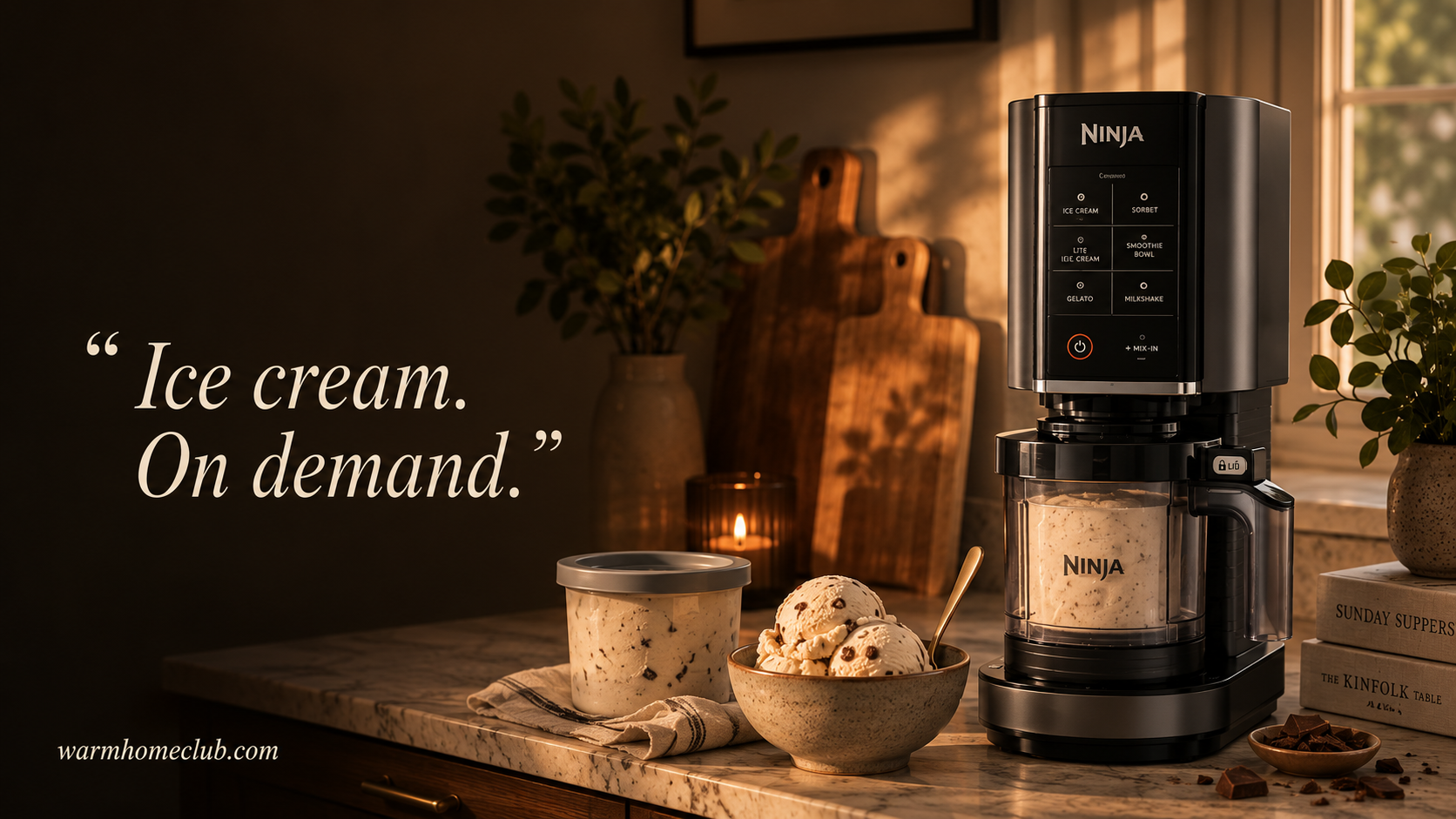
The original NC300UK runs 7 programs, including gelato, sorbet, milkshake and a dedicated mix-in setting, and comes with 3 tubs, so you can keep three flavours frozen and ready. That matters more than it sounds once you’re using it regularly.
Original or Deluxe?
The CREAMi Deluxe (NC501UK) is the bigger model. It has 10 programs instead of 7, adding Frappe, Frozen Drink and Slushi, plus a Top/Bottom option for two flavours in one tub. Its 709ml Deluxe tubs are larger, but it comes with 2 rather than 3. If you mainly make ice cream, one owner who has used both says the original does the job and saves money. The Deluxe makes more sense if you want the frozen drinks programs or bigger batches. We’ll update this section once we’ve tested the Deluxe ourselves.
The three mistakes that ruin most people’s experience
Many of the negative reviews trace back to one of three avoidable errors rather than a fault with the appliance.
The base wasn’t frozen properly. The base needs a full 24 hours to freeze solid and flat. Store it level, in the main compartment rather than the door, where temperatures swing more. A base that isn’t fully frozen tends to come out soft and soupy. Some owners also find that very hard tubs come out powdery on the first spin, and fix it with a re-spin or by letting the tub sit for a few minutes first. We’re testing both while we use the Deluxe.
The tub was overfilled. There’s a clear maximum fill line inside each tub. Going over it causes uneven processing and makes it more likely the machine struggles.
Mix-ins went in at the wrong stage. Chocolate chips, sweets or nuts go in after the base has been processed once, using the Mix-In program for a second pass. Don’t stir them into the frozen block before the first cycle.
Getting these three right from the first tub avoids most of the disappointment that shows up in negative reviews.
The honest downsides
Owner feedback is consistently positive on texture, taste and ease of use. One owner noted it’s an effective way to get children to eat more fruit. But a few things come up often enough to flag directly.
Noise. It’s loud while it processes, because it’s shaving through a solid frozen block rather than gently churning liquid. Owners compare it to a blender. Cycles are short, a few minutes, but it’s one of the most consistent complaints.
Reliability isn’t universal. Most owners have no problems, but a minority report the machine stopping working. Register it with Ninja for the 2-year guarantee as soon as you unbox it.
Planning and space. The 24-hour freeze means you can’t decide on a whim that you want ice cream tonight. The machine is also fairly large, at 40.5cm tall for the original, and the tubs take up freezer space too.
- Smooth, creamy texture from simple bases
- High-protein and lower-sugar ice cream that tastes like the real thing
- Smoothie bowls are a standout
- Easy to use once you understand the process
- Easy to clean
- Loud while processing
- Base needs freezing a day ahead
- Large on the worktop and in the freezer
- A minority report the machine failing
We shortlist products sold in the UK, then analyse verified owner reviews for recurring praise, recurring faults and how products hold up over months of use. Unless a product is marked WHC Tested, we have not used it ourselves.
Read how we choose what to recommend →So, is it worth it?
- You eat ice cream, sorbet or smoothie bowls every week
- You want high-protein or lower-sugar frozen treats
- You are happy to freeze a base a day ahead
- You want ice cream on a whim
- You might only use it once or twice out of curiosity
- Noise really bothers you
- You are short on worktop, cupboard or freezer space
If a high-protein or lower-sugar version of your favourite frozen treat appeals, this is one of the few appliances that pulls it off convincingly. If you think you might use it once or twice and then forget about it, it’s an expensive way to find that out. The noise and the planning are what usually put it back in the cupboard.
If you already own one, or you’re ready to buy, our easy Ninja Creami recipes UK guide covers ten reliable bases using supermarket ingredients, plus the accessories most owners end up buying.
Check the current price on Amazon
Ninja Creami: your questions answered
Is the Ninja Creami worth the money?
For anyone who eats ice cream, sorbet or smoothie bowls regularly, and particularly anyone interested in high-protein or lower-sugar versions, most owners consider it worth the price. Its main value is control over ingredients rather than convenience. For occasional or curious buyers, the price, the noise and the planning make it harder to justify.
How is the Ninja Creami different from a normal ice cream maker?
A traditional ice cream maker churns a liquid base while cooling it, producing ice cream in roughly 20 to 40 minutes. The Creami works the other way: you freeze a solid block of your base for 24 hours first, then the machine shaves and processes that frozen block into a smooth texture in a few minutes. It needs planning a day ahead, but it handles almost any frozen base, including dairy-free and low-sugar recipes.
Why does my Ninja Creami come out powdery or soupy?
Soupy usually means the base wasn’t fully frozen: give it a full 24 hours, stored level in the main compartment rather than the door. Powdery or crumbly usually means it needs a re-spin, and adding a splash of milk before re-spinning helps. Overfilling past the max line causes uneven results too. If a properly frozen, correctly filled tub keeps causing problems, contact Ninja under the guarantee.
Is the Ninja Creami loud?
Yes. It’s one of the most consistent complaints in owner reviews, because the machine is shaving a solid frozen block rather than churning liquid. Owners compare it to a blender. Cycles only last a few minutes, but in a small flat, or early in the morning or late at night, it’s worth factoring in.
When should I add mix-ins like chocolate chips?
After the base has been processed once. Make a hole in the middle, add your chocolate chips, sweets or nuts, then run the Mix-In program for a second, shorter cycle. Adding them before the first cycle tends to give uneven results.
Do I need to buy extra tubs?
The original NC300UK comes with 3 tubs and the Deluxe with 2 larger ones. Many regular users buy 1 or 2 extra tubs so they can freeze a new base while still working through another flavour. It’s optional, but it makes the 24-hour wait much less of a problem. Make sure the tubs match your model: Deluxe tubs and original tubs aren’t interchangeable.
Found this guide useful?
New buying guides, comparison updates, and the occasional deal worth knowing about. One email a week.
Last updated: . Prices correct at time of publishing and subject to change.