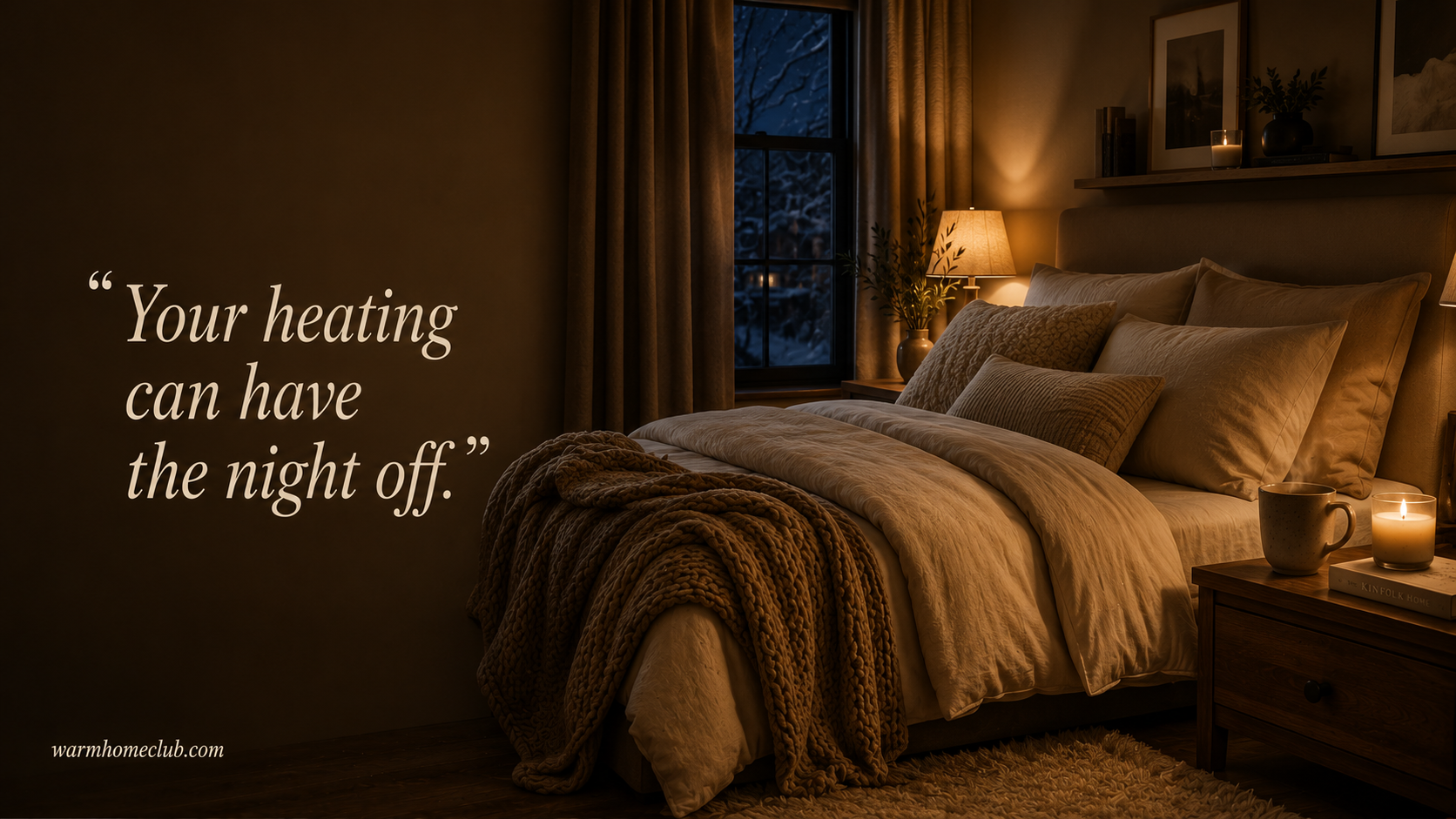
The instinct when a bedroom feels cold is to turn the thermostat up. It is also usually the wrong first move. Most bedroom cold comes from heat escaping through draughts, thin curtains, and uninsulated floors, rather than from a genuine lack of heating. Fix the escape routes and layer the bed properly, and you can often feel warmer at a lower, cheaper room temperature than you would blasting the heating in a leaky room.
Seal the draughts first, then cover the floor and layer the bed properly. Only after that add a direct heat source, such as an electric blanket, for the coldest nights.
The goal is not a hot room. The Sleep Charity recommends around 16 to 18°C for sleep, so what you want is a warm bed in a moderately cool room.
Stop the heat escaping before you pay to add more of it.
How warm should a bedroom actually be?
There is a genuinely counterintuitive point worth knowing before you start: the ideal bedroom temperature for sleep is not as warm as most people assume. The Sleep Charity recommends 16-18°C for adults, a noticeably cooler target than the 20-22°C many people aim for in living spaces. A bedroom below around 12°C will genuinely disrupt sleep, but so will one above 24°C. The goal is not maximum warmth. It is hitting that specific, cooler range comfortably, which is exactly what proper layering achieves without overheating the room.
Seal the room before you do anything else
This is the cheapest, highest-impact step, and it is the one most people skip. A gap under a bedroom door, an ill-fitting window seal, or thin curtains that do nothing to block a draught can undo most of what a radiator or heater is trying to achieve.
Fit draught excluders under doors
They are inexpensive and immediately noticeable, particularly on older doors or ones leading to an unheated hallway or landing.
Check window and door seals
Look for gaps you can feel a breeze through. A simple hand-check around the frame on a cold day will usually find the worst offenders.
Hang thermal or heavier curtains
They genuinely help retain heat, particularly on a room with a single-glazed or older window. Keeping them closed as soon as it gets dark, rather than waiting until bedtime, makes a bigger difference than people expect.
Deal with chimneys and letterboxes
These are two commonly overlooked draught sources in older UK homes. An unused chimney can pull a surprising amount of warm air out of a room, and a letterbox brush or cover on an external door helps for the same reason.
The floor loses more heat than you would think
Uninsulated wood or laminate flooring can account for somewhere between 10 and 20 percent of a room’s total heat loss, which is a genuinely large figure for something most people never think about. A thick rug placed over the coldest, most-used part of the floor, particularly beside the bed, is a simple, inexpensive fix that traps heat rather than letting it escape straight through the boards.
If a rug is not practical, for example over a fitted carpet that is already in place, closing the door to any adjacent unheated room, such as a landing, box room, or loft space, reduces how much cold air is pulled in under the gap and across the floor. Underlay fitted beneath an existing rug or carpet is a longer-term option worth considering if you are already planning any flooring work, since it adds a genuine layer of insulation rather than just a decorative one. It is worth prioritising before you spend more on heating.
Layer the bed properly
This is where most of the real winter comfort comes from, and it is more effective than most people expect once the tog rating and layers are actually right.
Start with the right tog duvet
A 10.5 tog duvet is the standard year-round choice for most centrally heated UK homes, and a 13.5 tog or an all-seasons combination suits a genuinely cold room or a cold sleeper. The price difference between a 10.5 and a 13.5 tog duvet is typically modest, often less than the cost of running a room heater for a single extra week, which makes it one of the better value upgrades in this whole guide. Our best duvets UK guide covers the full range by tog and budget.
Add a mattress topper for warmth, not just comfort
A good topper adds an insulating layer between you and a cold mattress surface, which matters more in winter than most people realise, since a cold mattress core can undo some of what a warmer duvet is doing above you. See our best mattress toppers UK guide for picks by firmness and budget.
Switch to brushed cotton or flannelette sheets
They feel noticeably warmer against the skin than standard cotton from the first moment you get into bed, since the brushed texture traps small pockets of air close to the body. This is a genuinely cheap upgrade worth considering alongside the duvet and topper changes above.
Add a direct heat source for the coldest nights
Layering solves most of the problem, but on genuinely cold nights, a direct heat source closes the gap without needing to heat the whole house.
An electric blanket warms the bed itself before you get in, for a fraction of the cost of running central heating for the same room. Our best electric blankets UK guide covers underblankets and heated throws by price and feature.
150W for 1 hour costs about 3.9p.
Based on 26.32p per kWh. Checked September 2026.Based on a 150W single underblanket. Check the wattage on your own blanket, and expect it to cost less on a lower setting.
A hot water bottle is worth keeping in mind as the low-cost, no-electricity alternative, particularly for anyone who wants to avoid running anything electrical overnight or is looking for the cheapest possible way to warm the bed before getting in. It will not maintain heat all night the way an electric blanket does, but for warming up cold sheets in the first few minutes, it remains a genuinely popular and effective UK habit for good reason. Just don’t use one in the same bed as an electric blanket: Electrical Safety First advises against combining the two.
A small electric heater is worth having on hand for a genuinely cold snap, rather than as a nightly habit, since running one continuously all night works out more expensive than the combination of good layering and an electric blanket. See our best electric heaters UK guide for picks suited to bedroom use specifically.
If the room still won't warm up properly, check for damp
If you have sealed draughts, layered the bed properly, and the room still feels cold and slightly clammy rather than simply chilly, damp and condensation may be the actual underlying issue rather than a lack of heating. Trapped moisture in the air makes a room feel colder than the thermometer suggests, and no amount of extra heating fully compensates for that. Our guide to why your house might be so damp in winter covers the real cause and what actually fixes it.
Cold bedroom in winter: your questions answered
What is the ideal bedroom temperature for sleep in winter?
The Sleep Charity recommends 16 to 18 degrees Celsius for adults. This is noticeably cooler than the temperature most people keep their living spaces at, but a cooler bedroom actually supports the body’s natural temperature drop before sleep and helps produce melatonin. A room below around 12 degrees will disrupt sleep, and so will one above 24 degrees, so the aim is hitting that specific range comfortably rather than maximising warmth. If you are over 65 or have a long-term health condition, government advice is to heat the bedroom to at least 18 degrees.
Does a heavier duvet actually make a difference?
Yes, genuinely. Tog rating measures thermal insulation, and moving from a 4.5 or 7 tog summer-weight duvet to a 10.5 tog standard winter duvet, or a 13.5 tog for a genuinely cold room, makes a noticeable difference to overnight warmth. This is usually a bigger and cheaper improvement than turning up central heating, since the duvet only needs to warm the small pocket of air immediately around you rather than the whole room.
Is it cheaper to use an electric blanket than to heat the whole bedroom?
Generally yes. An electric blanket warms only the bed itself for a few pence an hour, whereas heating an entire bedroom for the same period, either through central heating or a room heater, costs considerably more for a comparable improvement in comfort. Most people find combining a lower thermostat setting with an electric blanket and a well-chosen duvet gives a warmer night’s sleep at a lower overall running cost than heating the room alone.
Why does my bedroom feel cold even with the heating on?
This is usually down to heat escaping faster than it is being replaced, most commonly through draughts under doors, gaps around window frames, thin curtains, or an uninsulated floor. Uninsulated wood or laminate flooring alone can account for 10 to 20 percent of a room’s total heat loss. Sealing draughts and adding a rug are often more effective first steps than simply increasing the heating, since they address the actual cause rather than compensating for it.
Does a mattress topper actually help with warmth, or is it just for comfort?
Both, and the warmth benefit is genuinely underappreciated. A cold mattress surface draws heat away from the body throughout the night, which works against whatever warmth a duvet is providing above you. A good mattress topper adds an insulating layer between you and that cold surface, which noticeably improves how warm the bed feels overall, not just how comfortable it is.
Should I keep the heating on low all night in winter?
For most UK homes, no. It is generally cheaper and equally comfortable to let the bedroom sit at its natural cooler evening temperature, within the recommended 16 to 18 degree range, and rely on good layering, such as the right tog duvet, a mattress topper, and an electric blanket, rather than running central heating continuously through the night. The exception is anyone more vulnerable to the cold, such as people over 65 or with a long-term health condition, where government advice is to keep the bedroom at 18 degrees or above. Reserve a dedicated room heater for genuinely cold snaps rather than as a nightly habit, and switch it off before you go to sleep.