Here’s a detail most homeowners never check: some UK carpet warranties come with cleaning conditions attached. Cormar’s care and warranty guide, for example, says your carpet should be professionally cleaned at least once every two years, and that you should keep the receipts and invoices to validate any claim. Skip it, and a genuine 10-year warranty can be much harder to claim on the moment you actually need it, regardless of how carefully you’ve vacuumed in the meantime.
That’s just one of five genuinely common, genuinely avoidable mistakes that quietly ruin carpets long before they should need replacing. Most carpet damage isn’t caused by kids, pets, or bad luck. It’s caused by the well-intentioned cleaning attempt that came right after the spill.
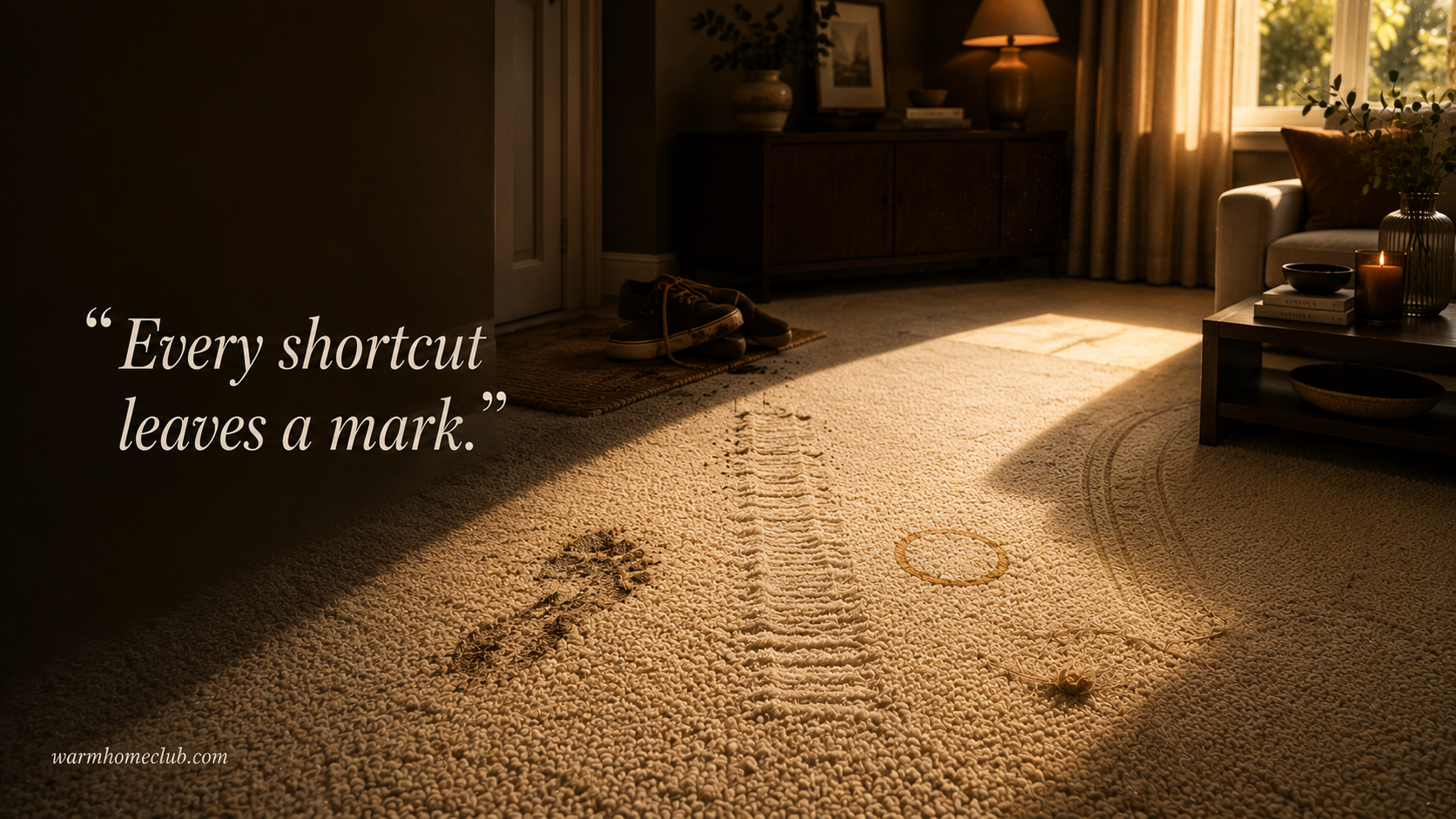
The spill is rarely what ruins a carpet. The cleaning attempt that follows it usually is: too much water, scrubbing instead of blotting, the wrong product, or leaving the stain to set.
The fifth mistake is slower. Skipping professional cleans wears the carpet down over time, and some manufacturers make them a condition of the warranty.
Blot, don't rub, and use less water than feels natural.
The 5 mistakes at a glance
- The mistakeOver-wetting the carpetWhat it doesCauses mould, shrinkage, and backing damageDo this insteadUse only as much water as the instructions call for, then dry it quickly
- The mistakeScrubbing a stain instead of blotting itWhat it doesPushes the stain deeper and damages fibresDo this insteadBlot with a clean cloth, working from the outside inward
- The mistakeUsing the wrong product, or skipping the test patchWhat it doesCan permanently bleach or discolour the carpetDo this insteadTest on a small, hidden area first
- The mistakeLeaving a stain to setWhat it doesMakes it far harder, sometimes impossible, to fully removeDo this insteadBlot up the excess straight away, even if the proper clean comes later
- The mistakeSkipping proper deep cleansWhat it doesCan undermine a manufacturer's warranty claimDo this insteadCheck your warranty terms and keep dated invoices
Here’s what each one actually does to your carpet, and what to do instead.
1. Over-wetting the carpet
This is, by a clear margin, the single most common carpet-ruining mistake. It feels intuitive to assume more water means a deeper clean, the way it might with a hard floor, but carpet doesn’t work that way. Excess moisture soaks into the underlay beneath the carpet, where it can sit for days without properly drying, creating exactly the conditions mould and mildew need to take hold. Beyond the smell and health concerns, over-wetting can also shrink the carpet, discolour it, and weaken the backing that holds the whole thing together. On wool carpets it can cost you the warranty too: Cormar’s guide warns that over-soaking when cleaning up spills and stains can invalidate its 10-year guarantee.
2. Scrubbing a stain instead of blotting it
The instinct to scrub hard at a fresh stain is almost universal, and it’s almost always the wrong move. Scrubbing pushes the staining liquid deeper into the carpet fibres and the padding underneath, rather than lifting it out, and on wool or wool-mix carpets in particular, it can physically damage and distort the fibres, leaving a patch that looks and feels different from the surrounding carpet permanently.
3. Using the wrong cleaning product, or skipping the test patch
Not every stain remover is safe for every carpet, and bleach or harsh household cleaners on a coloured carpet can permanently strip the dye rather than lift the stain, leaving a pale patch that’s often more noticeable than the original mark. This applies just as much to a shop-bought carpet cleaner as it does to an improvised household solution.
4. Leaving a stain to set before treating it
Spills happen, and life gets in the way of dealing with them immediately. But the longer a stain sits, particularly anything acidic, coloured, or protein-based like wine, coffee, or pet accidents, the deeper it works into the carpet fibres and the padding beneath, and the harder it becomes to fully remove. Some stains, left long enough, become effectively permanent. Cormar’s guide goes further: spillages should be tackled immediately, and leaving them for prolonged periods can invalidate the guarantee.
5. Relying on vacuuming alone and skipping proper deep cleans
Vacuuming removes surface dirt, but it doesn’t touch the dirt, allergens, and residue that work their way deeper into the carpet pile over time. Beyond the visible wear this causes, there’s the warranty detail mentioned at the start: some UK carpet warranties expect a professional clean at regular intervals, and Cormar’s asks for one at least every two years. Skip that requirement, and a 10-year warranty can be much harder to claim on if you ever need it, regardless of how well you’ve vacuumed in the meantime.


Carpet cleaning mistakes: your questions answered
Why should you blot a carpet stain instead of scrubbing it?
Scrubbing pushes the staining liquid deeper into the carpet fibres and the padding underneath rather than lifting it out, and it can physically damage and distort the fibres, particularly on wool or wool-mix carpets. Blotting, pressing a clean cloth onto the stain and lifting straight up, draws the liquid out of the carpet instead of pushing it further in, which is why it consistently removes stains more effectively without causing lasting damage to the pile.
Can too much water damage a carpet?
Yes, significantly. Excess water soaks into the underlay beneath the carpet, where it can remain damp for days, creating the conditions mould and mildew need to develop. Over-wetting can also shrink the carpet, cause discolouration, and weaken the backing that holds the carpet together. Using only as much water as the cleaning product instructions call for, and drying the area quickly afterwards with a fan, open window, or dehumidifier, avoids this.
Does using bleach on a carpet ruin it?
On a coloured carpet, yes, in most cases. Bleach and other harsh household cleaners can strip the dye from carpet fibres, leaving a pale, discoloured patch that is often more noticeable and harder to fix than the original stain. Always test any cleaning product, including bleach-based ones, on a small hidden area first and check for discolouration before using it on a visible part of the carpet.
Can not cleaning your carpet regularly void the warranty?
For some carpets, yes. Some UK carpet manufacturers set cleaning conditions in their warranty terms. Cormar’s care and warranty guide, for example, says carpets should be professionally cleaned at least once every two years, with receipts and invoices kept to validate any claim. Missing this can make a long-term warranty much harder to claim on. Check your specific carpet’s warranty documentation and keep dated invoices as proof of any professional cleans carried out.
How quickly should you treat a carpet stain?
As quickly as reasonably possible. The longer a stain sits, particularly anything acidic, coloured, or protein-based such as wine, coffee, or pet accidents, the deeper it works into the carpet fibres and padding, and the more likely it becomes permanent. Even blotting up excess liquid straight away, before a fuller clean later, meaningfully reduces the chance of a lasting mark. Keeping a fast-acting stain remover on hand means you can treat a fresh mark within minutes rather than waiting for a full clean.
Is a steam mop good enough to clean carpets properly?
Not on its own. A steam mop with a carpet glider attachment can freshen the surface and lift a small amount of dirt, but it does not extract water and dissolved dirt back out of the carpet the way a dedicated wet-vacuum carpet cleaner does. For everyday freshening between deeper cleans it is a reasonable light-duty tool, but it is not a substitute for a proper carpet cleaning machine or a professional hot water extraction clean.